IRENA 16A: Assembly Live Coverage
Newsletter
Welcome to the Sixteenth session of the IRENA Assembly under the theme: Powering Humanity: Renewable Energy for Shared Prosperity
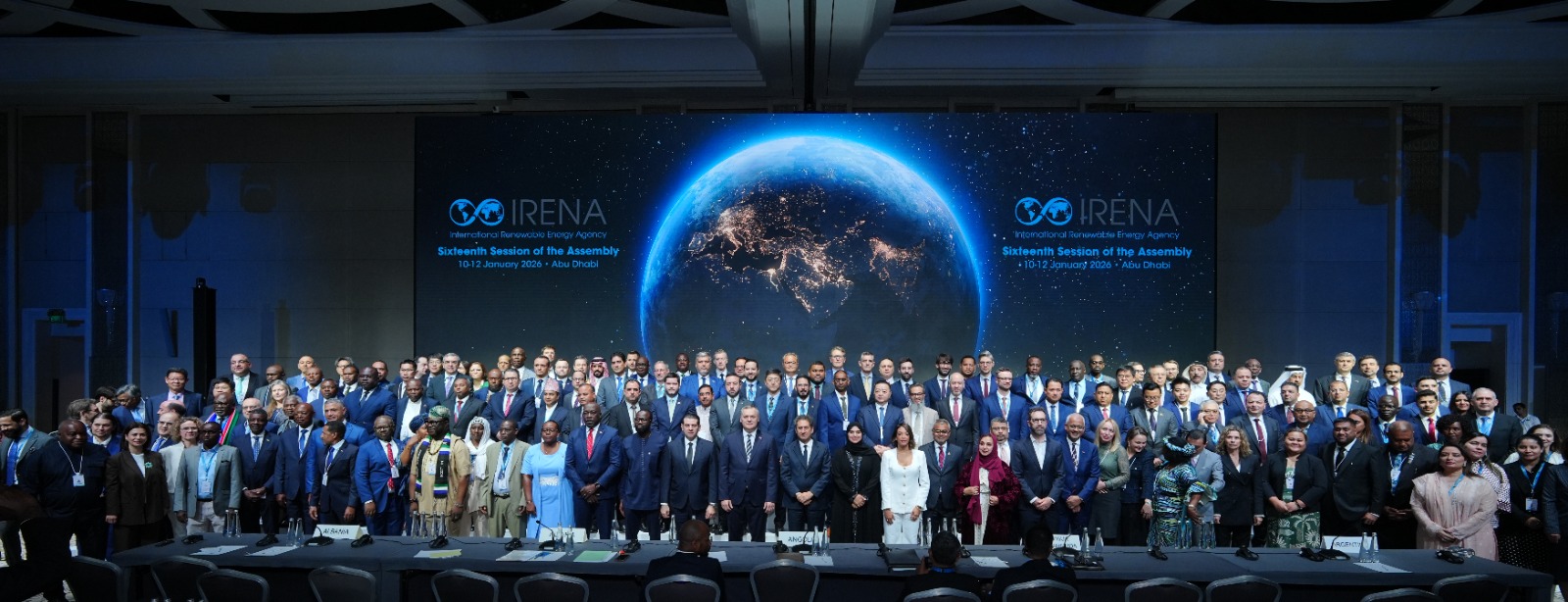
This Assembly session gathers over 1500 participants, including global leaders and energy decision-makers to discuss progress and outline actions to accelerate the global renewable energy transition, aligned with the UAE Consensus, the 2030 Sustainable Development Agenda, and the Paris Agreement.
Follow this page for live blog coverage from all sessions on 11 and 12 January and check IRENA social media channels for updates on #IRENA16A.
See the full schedule and live stream here.
See the live stream of the Opening session and welcoming remarks:
The outgoing President of the 15th Assembly, H.E. Mr. Bojan Kumer, Minister of the Environment, Climate and Energy of Slovenia, declared the 16th Assembly Session open, welcoming all delegates and speakers. He reaffirmed that "IRENA's core mission is to facilitate multilateral cooperation in advancing the clean energy transition" and that the Agency remains "the right institution for the promotion of renewable energy worldwide.
H.E Joel Santos Echeverría Minister of Energy and Mines for the Dominican Republic, incoming President of the 16th Assembly, delivered his video remarks stating "This assembly must contribute in a complete and effective manner to accelerating a just, inclusive, and result-oriented energy transition," adding that "for developing countries and particularly for Small Island Developing States, this transition is inseparable from climate resilience, energy security, economic stability, and the fundamental right of our people to a sustainable future." Reflecting on the Assembly theme, "Powering Humanity: Renewable Energy for Shared Prosperity," he reaffirmed commitments to tripling renewable energy capacity and doubling energy efficiency by 2030. He concluded: "Shared prosperity can only emerge when countries work together in a spirit of solidarity, cooperation, and shared responsibility."
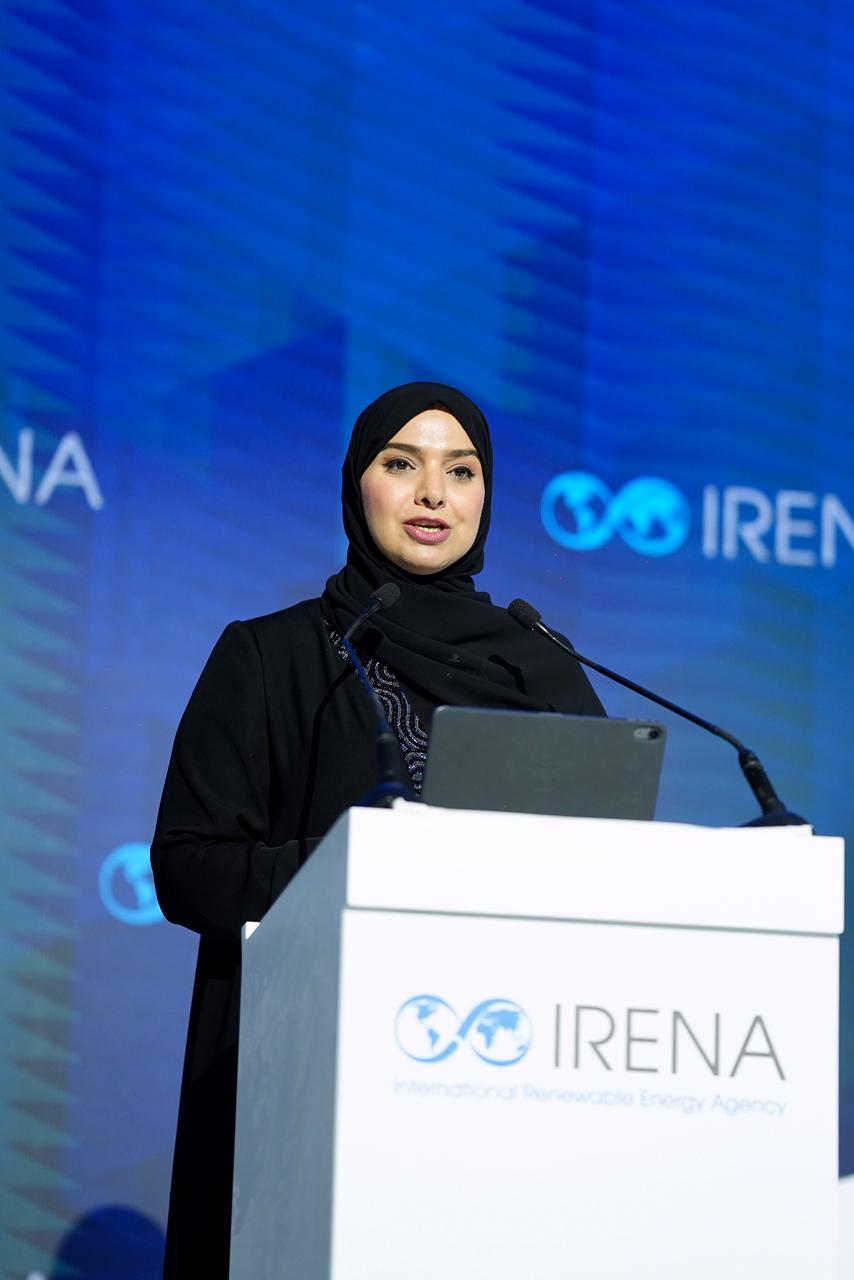
"Geopolitical tensions, economic uncertainties and climate crisis have intensified, placing additional pressure on the renewable energy landscape," stated H.E. Dr. Amna bint Abdullah Al Dahak, Minister of Climate Change and Environment, United Arab Emirates, delivering the remarks of the host country. She highlighted the resilience of the sector, noting that "the momentum of renewables has not stalled at all, on the contrary, it has strengthened and gained momentum," with projects advancing and communities embracing clean technologies at an accelerated pace. She added: "While the external challenges grow louder, the progress on the ground grows stronger," reasserting the importance of continued ambition and collaboration to accelerate the energy transition. |
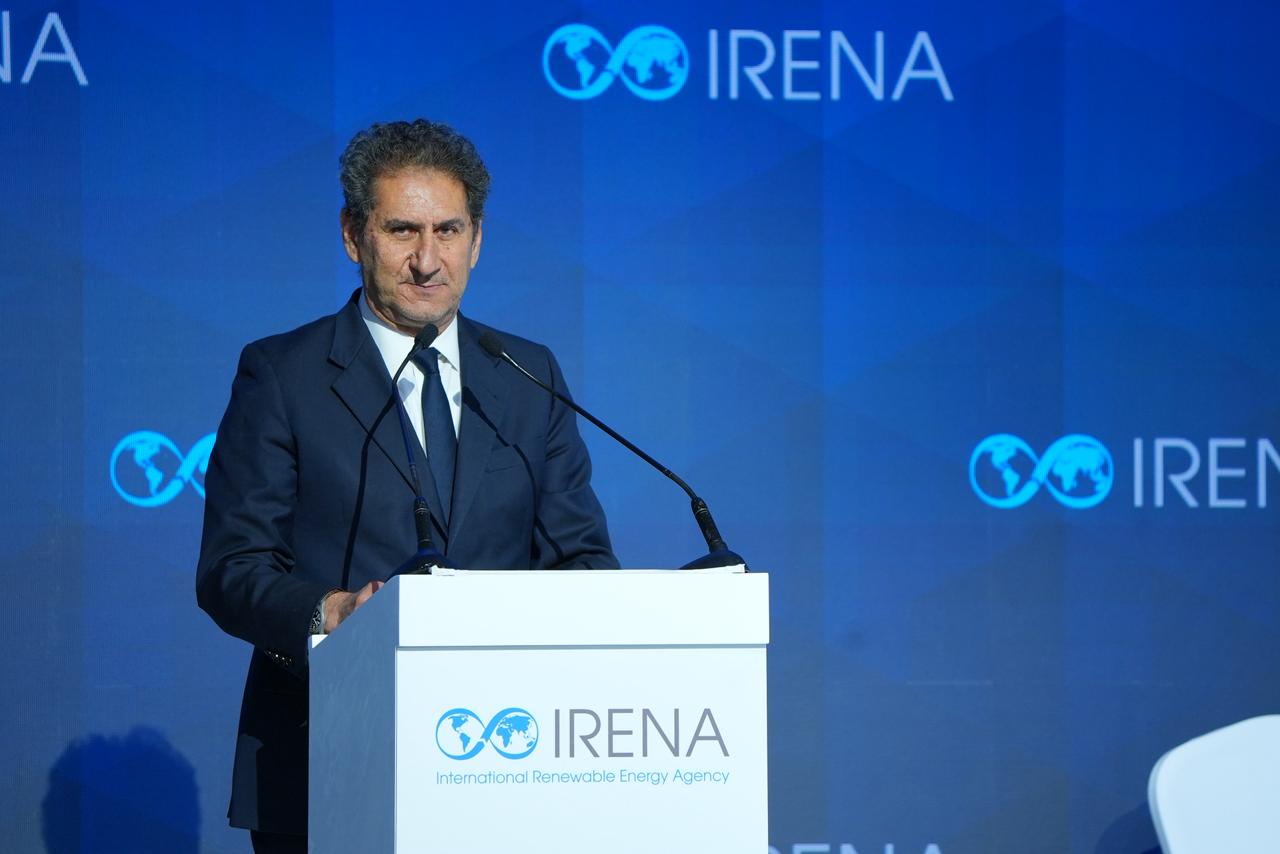
IRENA Director-General, Francesco La Camera, opened the 16th Assembly by welcoming a record 1,524 participants from 139 countries, underscoring the strength of multilateral cooperation in advancing the energy transition. He noted that 92% of newly installed power capacity last year was renewable, stating that "renewables have claimed dominance in the global energy landscape, this process is unstoppable, and nothing can reverse it." He emphasised: "Renewable energy is not just a climate solution, it is a competitiveness solution, a development solution, and an energy security solution." Reflecting on the Assembly theme, Powering Humanity: Renewable Energy for Shared Prosperity, he concluded: "The greatest measure of success in the renewables-based energy transition will not be in the megawatts we install, but in the lives we empower and transform for the betterment of humanity." |
Antonio Guterres, Secretary-General of the United Nation, addressed the 16th Assembly through his video remarks stating, "The clean energy transition is unstoppable and irreversible," when commenting on the accelerating momentum of renewable energy globally. "Solar and wind are smashing records. In 2025, clean energy investment soared to 2.2 trillion US dollars, double fossil fuel spending," he noted, while cautioning that "while technology races ahead, infrastructure lags far behind." He concluded by urging action to "build energy systems that are clean, secure, and aligned with a 1.5° world."
See his full video remarks below:
"The march to a renewable energy future has proven unstoppable," said H.E. Annalena Baerbock, President of the United Nations General Assembly, calling on delegates to recommit to scale up financing, foster partnerships, reform financial architecture, and build a skilled renewable workforce. She spotlighted that global renewable capacity has grown from 153 gigawatts in 2015 to over 4,400 gigawatts last year, adding: "While we often talk of tipping points in the negative sense when discussing climate change, there is a positive tipping point as well, and this is, for sure, renewable energy." Remarking on the record investment in the energy transition in 2024, she emphasised: "There is no way back."
See her full video remarks below:
High-Level Dialogue on Reimagining Energy Futures: Bold Visions for Shared Prosperity
The day commences with a High-Level Dialogue, shaping collective visions for future energy systems while building momentum to accelerate global renewable energy deployment.
See the live stream:
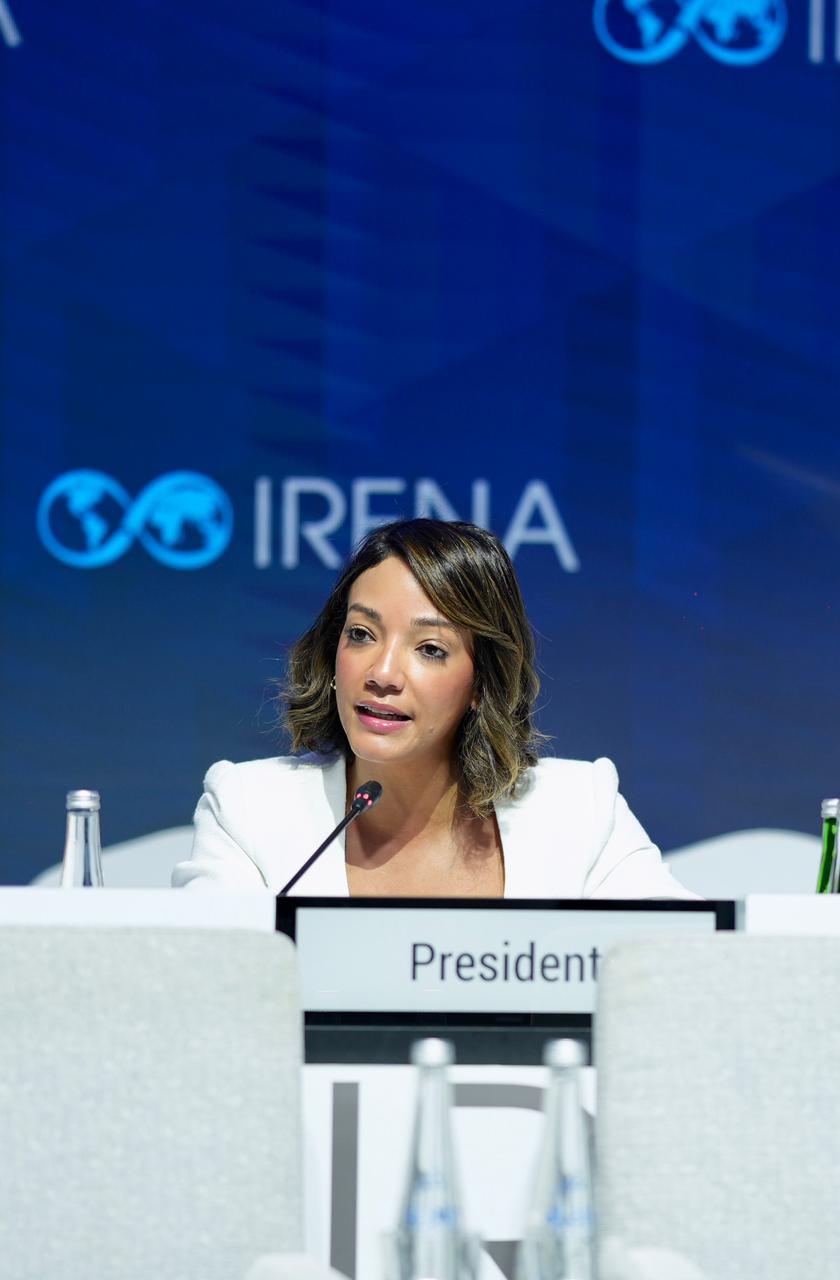
H.E. Ms. Betty Soto, Deputy Minister of Innovation and Energy Transition of the Dominican Republic, representing the incoming Presidency of the 16th IRENA Assembly, opened the High-level Dialogue saying, "Renewables sit at the heart of this discussion, combining substantial economic potential with the capacity to advance climate action and long-term sustainability." She acknowledged the barriers facing developing countries, adding, "access to affordable financing remains a major concern," while "energy security has taken on renewed significance, shaped by geopolitical tensions and supply chain vulnerabilities." Underlining the importance of inclusivity, she stressed that "the success of the energy transition hinges on ensuring that people feel energy systems serve their needs." She called on delegates to "collectively recommit to accelerating renewable deployment" and reaffirm belief in "international cooperation to deliver a sustainable energy future where prosperity is inclusive and shared by all." |
As moderator, Ms. Melinda Crane introduced the panel discussion by saying that despite rising renewable deployment, "we are not where we need to be in terms of realising the affordable, reliable, and inclusive energy system promised by SDG 7." She called for the dialogue to be "a space for reflection and for visions," adding: "We so often hear words like inclusive, just, sustainable but we want to fill those terms with content and meaning."
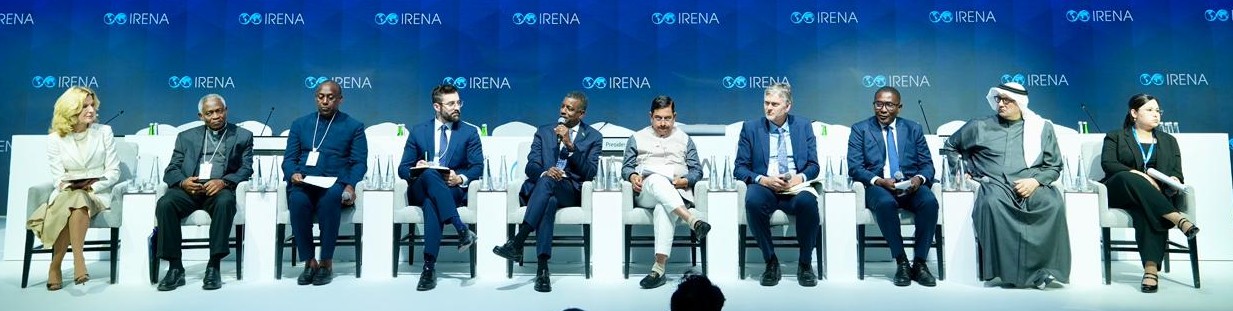
"It is very difficult to have a transition to clean energy if we do not pay attention to resilience," stated H.E. Vince Henderson, Minister of Foreign Affairs, International Business, Trade and Energy of Dominica, reflecting on the unique challenges facing Small Island Developing States. He acknowledged the compounding barriers of country risk, high financing costs, and exorbitant insurance, but expressed optimism: "The good news is that we are very ambitious across the small island states,” emphasising "Regional approaches are key, that is one of the ways we can overcome the obstacle of size."
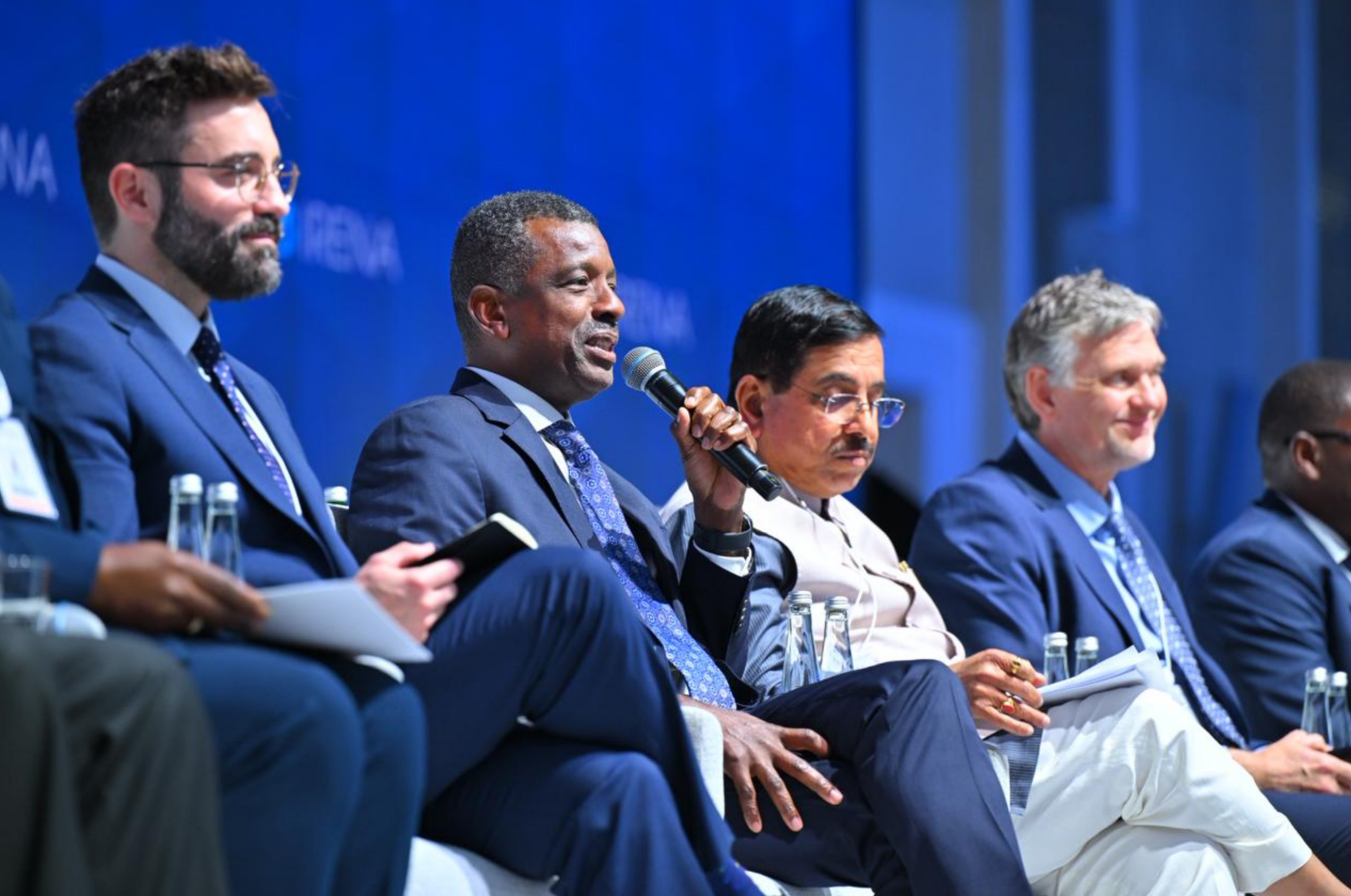
"Equity means the energy transition is not just technology transfer, it is a change for the society, a change for the economy, and a change for a safe earth for the next generation," said H.E. Pralhad Joshi, Minister of New and Renewable Energy of India. He highlighted that India has achieved 260 gigawatts of installed renewable capacity five years ahead of schedule, with 2.6 million households connected to rooftop solar. He emphasised that the transition "should become a people's movement" and called for "affordable finance, blended finance, and multidevelopment banks" to support the global south, concluding: "International cooperation for every state, especially for the global south, is most needed."
"Through partnership, alliances, and political will, we have collectively changed and transformed the world," says Mr. Mohamed Jameel Al Ramahi, CEO of Masdar, reflecting on private sector contribution to the energy transition. On solving intermittency, he stated: "We can control the power of the sun, even when the sun is not shining, that's the North Star we have always been working on," noting the breakthroughs in battery storage technology. He concluded: "With platforms like IRENA, the will of member countries, and multilateral institutions, the way forward is positive.
Ms. Andrea Balcázar González, IRENA Youth Council member says, "The system as it currently works is not delivering, and therefore it must evolve," sharing a youth perspective on reimagining the energy future. She emphasised that "there is no lack of capacity in youth, but extraordinary potential, strong ideas, and a real desire to have a seat at the table." She noted that "one of the biggest challenges we face is not the lack of capacity, but the lack of access, we're often consulted but rarely empowered,” calling on policymakers to "move away from symbolic engagement" and ensure young people are included as partners in shaping policy.
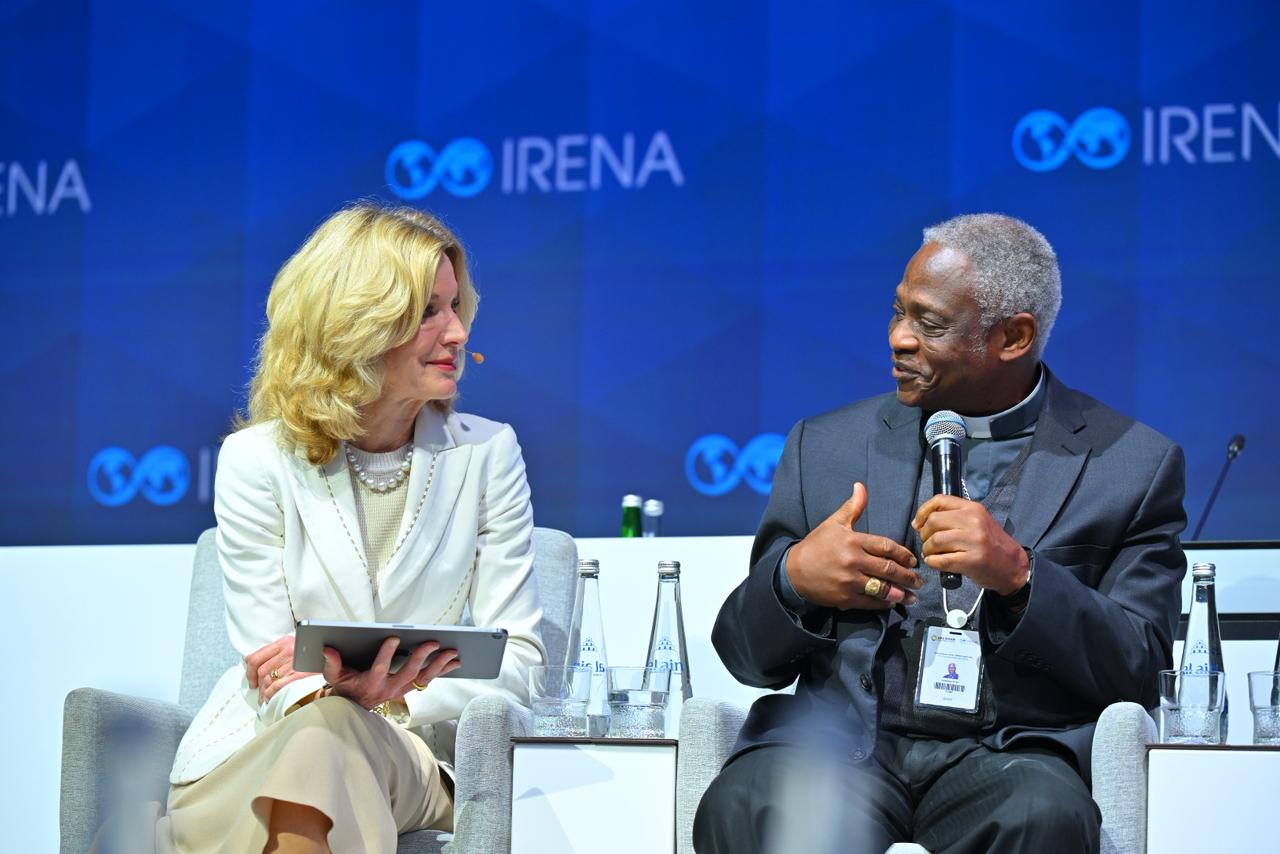
"In everything about energy, the environment and human development, there are no independent variables. These are all interconnected," says Cardinal Peter Kodwo Appiah Turkson, Prefect Emeritus of the Dicastery for Promoting Integral Human Development, Holy See. He noted that "the dignity of the human must be safeguarded" through energy access and sustainable development. He called for sustainable approaches, concluding: "There can be no development and growth without it. But we must ensure it serves human dignity for generations to come."
Mr. Selwin Hart, Special Adviser to the Secretary-General on Climate Action and Just Transition, United Nations, emphasised the critical role of international collaboration in accelerating the energy transition. "This next phase will not only be defined by national action, but more importantly, by how we strengthen international cooperation and collaboration," he stated. He noted that "the sum of individual initiatives are not delivering the speed and scale we need to ensure developing countries are part of this acceleration," calling for consolidated support: "We need cooperation at the international level to deliver targeted surge support to the developing world." He concluded, "We need to ensure that no one is left behind and that the energy transition is fair and just, and delivers on the dignity of life."
In her closing reflections, H.E. Ms. Betty Soto, Deputy Minister of Innovation and Energy Transition of the Dominican Republic, summarised the key themes, noting that "multilateralism is not an abstract idea, but a practical necessity for delivering real climate outcomes and economic development." The discussions highlighted affordable energy, inclusion, and international cooperation as central priorities. On youth, she emphasised: "Today's energy choices will define their opportunities for decades to come." She concluded that "an inclusive transition is critical to build public trust and accelerate change."

High-Level Dialogue on Accelerating Electrification: Pathways for Renewables, Grids, and Industry
Convened jointly by the Utilities for Net Zero Alliance (UNEZA) and the Alliance for Industry Decarbonization (AFID), this high-level session provides a platform for strategic discussions on electrification challenges, focusing on policy frameworks, financing, technological deployment, and system flexibility.
See the live stream here:
IRENA Deputy Director General, Gauri Singh, delivered opening remarks welcoming delegates on behalf of IRENA, UNEZA, and AFID. She highlighted that by 2050, electricity will be the dominant energy carrier at over 52%, noting: "This is a huge transformation that is progressing, but not progressing evenly." She cautioned that "if these gaps persist, electrification risks reinforcing existing inequalities rather than enabling inclusive development." The challenge, she stressed, "is not just to accelerate electrification, but to ensure it strengthens energy security, supports industrial transformation, and builds resilience in all regions."
Dr. Dimitrios Dimitriou, Group Vice President of ESG & Sustainability at EMSTEEL and AFID Co-Chair, shared an industry perspective on behalf AFID, noting "AFID members have committed significant investments in renewable energy, electrification, hydrogen, circularity, and workforce transformation, demonstrating that industry can be a driver and not a barrier to the energy transition." He emphasised that "electrification at scale will only succeed if renewable generation, industrial demand, and finance mechanisms advance together." He stressed the importance of "system-level collaboration" between governments, industry, finance, and institutions to accelerate the energy transition in a practical and inclusive manner.
"Our industry is quite literally setting about to rewire the energy system, and doing so at the speed required means we need to collaborate, even if geopolitics seems to be moving in the other direction," said Mr. Gareth Wynn, UNEZA Co-Chair and TAQA Chief Communications Officer. He emphasised that utilities have a central role in accelerating electrification and delivering the clean power system needed for the future and outlined three priorities: mobilising finance, creating enabling policy and regulatory conditions, and strengthening supply chains. He added: "To realise the full potential of electrification, we need resilient grids, scalable storage, and expanded access to affordable finance, particularly for projects in the global south."
Setting the scene, Mr. Gurbuz Gonul, Director of IRENA's Country Engagement and Partnerships, emphasised that "electrification has moved from a technical option to a central pillar of the energy transition, it is no longer a future ambition, it is a present-day necessity." He observed that while electricity is set to become the dominant energy carrier by 2050, "this transition is uneven," with heavy industry and transport lagging. He stressed that "progress in one area alone is not sufficient, all must evolve together," outlining joint UNEZA and AFID efforts to accelerate electrification through scaled renewables and mobilised finance.
Panellists emphasised electrification as central to the energy transition, with grid modernisation and regional interconnection emerging as key enablers. Several speakers outlined ambitious renewable energy targets, stressing that industrial demand can be readily electrified with competitive alternatives. Concerns were raised that 600 million people globally still lack electricity access, calling for accelerated action particularly in sub-Saharan Africa. Participants advocated for getting "market design right" and underscored that "electrification will only grow as fast as our grids grow," calling for coordinated action across governments, regulators, and industry.
Renewable Energy Auctions for Risk Mitigation and Allocation
In collaboration with partners of the Sustainable Renewables Risk Mitigation Initiative (SRMI), this interactive session explores how renewable energy auctions can be structured to balance investor confidence, consumer affordability, and broader development objectives.
The session is opened by Ms. Ute Collier, IRENA Acting-Director, Knowledge, Policy and Finance Centre, who welcomed participants thanked partners engaged in the Sustainable Renewables Risk Mitigation Initiative (SRMI), led by the World Bank’s Energy Sector Management Assistance Program (ESMAP). She introduced IRENA's joint work with SMRI, Renewable Energy Auctions: Design for risk allocation, which would be presented during the session.
Presenting the findings of the joint report, Mr. Demetrios Papathanasiou, the World Bank's Global Director of Energy and Extractives Global Practice, underscores the focus on the analyses: how specific auction design choices shift risks and responsibilities among investors, governments, developers. "At World Bank we support governments to make sure that the right auction design meets the countries' specific needs to truly bring in investments and help implement renewable energy projects."

The session continued with a presentation from Ms. Hannah Sofia Guinto, IRENA Associate Professional – Energy Transition Policies and Finance. She shared some key trends from IRENA flagship report on finance, which shows investments in renewable energy have been consistently increasing since 2019, reaching USD 807 billion by end of 2024. "The new report we're revealing today, Renewable Energy Auctions: Design for risk allocation, was developed to highlight emerging trends in risk allocation in renewable energy projects--particularly in developing countries--and how the application of certain instruments and auction parameters have several tradeoffs that go beyond the resulting price from an auction."
Representing the Stockholm Environment Institute (SEI), Mr. Daniel Duma, Director, Finance for Sustainable Development Programme, presented SEI's work in analysing financial mechanisms for renewable projects different parts of the world. "Carefully planned risk mitigation strategy is what works best in advancing projects implementation. Risk mitigation is needed and effective, but it needs to be continuously analysed and improved for different markets."
The session highlighted concrete country experiences, practical approaches to risk allocation, and actionable lessons for facilitating investment in emerging markets. Available support instruments and programmes from international partners were also explored, identifying opportunities for collaboration to unlock investment and scale renewable energy deployment.
Energy Transitions Across the Mediterranean
This roundtable convenes policymakers, financiers, and system operators to examine how to align capital flows with the urgent need for infrastructure readiness across the Mediterranean region. MED9 countries are poised for a significant scale-up in renewable energy, with installed capacity projected to increase by over 460% by 2050 compared to current levels.
North Africa's Mediterranean coast holds renewable potential exceeding 1,500 GW of solar PV and onshore wind at competitive prices. Yet ambitions to trade power and clean molecules are rapidly outpacing physical reality, with grid development increasingly decoupled from generation expansion.
Against this backdrop, the panel explored financing strategies for both long-term cross-border interconnection and immediate grid modernisation, with the goal of ensuring the Mediterranean grid is resilient, flexible, and capable of anchoring a secure regional energy transition.
Discussions centred on planning strategies that synchronise renewable deployment with transmission expansion, alongside cooperation frameworks to manage rising equipment costs and ensure timely infrastructure delivery. Panellists also emphasised the importance of aligning investment strategies with local economic development to deliver tangible benefits to communities across the region.
Ministerial Roundtable: Geothermal Heat and Power – Building a Resilient Energy Backbone
Under the framework of the Global Geothermal Alliance, IRENA convened this high-level Ministerial roundtable to set a shared vision for promoting geothermal power and heat solutions aligned with energy security, climate, and socio-economic development goals.
See the live stream here:
The Ministerial Session on Geothermal Energy began with introductory remarks from Mr. John Defterios, who noted that while geothermal is "a source over a century old, it has hardly been tapped to its full potential, with less than $9 billion deployed compared to trillions invested in solar PV and wind over the last decade.” He observed that "the narrative has changed dramatically in the past 12 months," with major technology companies signing new agreements for geothermal-driven electrification. He invited panellists to explore how this breakthrough moment can accelerate geothermal deployment globally.
"Innovation is accelerating geothermal's potential, with the right policy action and international cooperation, we can turn that innovation into scale," stated IRENA Director-General Francesco La Camera, opening the session on geothermal energy. He emphasised that "geothermal delivers firm, clean electricity" and is "uniquely positioned" to strengthen energy security and complement variable renewables. On unlocking geothermal investment at scale, he outlined three priorities: "Remove barriers to faster permitting, enable early-stage demonstration to de-risk investment, and establish planning, procurement, market and financial frameworks that value clean firm power." He reaffirmed the Global Geothermal Alliance (GGA)'s commitment to supporting countries in turning geothermal from promising potential into scalable deployment. "

“Geothermal is as much about heating as it is about power generation—we can significantly change our energy systems if we manage to draw on that huge potential," stated Ms. Ditte Juul Jørgensen, Director-General of the European Commission for Energy. She identified key policy priorities including improving access to geological data, addressing high upfront capital costs, and streamlining permitting. On the technology's role in a just transition, she observed: "We can use the technologies, the skills, the products, the sites of fossil extraction to help those workers and areas move into geothermal—this is very much part of a fair and just transition." She also pointed to emerging opportunities, noting that access to geological data remains a key obstacle: "AI can be a significantly contributing factor in getting the data and the best use of the data, to accelerate geothermal deployment and help governments work together more effectively.” |
The roundtable explored pathways to maximise synergies between geothermal and oil and gas sectors, with rising electricity demand from AI-powered data centres identified as a major deployment opportunity. Participants shared national experiences, including new legislation to attract investment and large-scale heating retrofits that replaced natural gas. Streamlined permitting and community engagement emerged as key enablers, while integrating geothermal into NDCs and long-term energy strategies was highlighted as essential to grow its share in the renewable mix.

Closing the session, H.E. Mr. Kenneth Milimo Nganga, Ambassador of the Republic of Kenya to the UAE and Vice President of the 16th Assembly, said: "We have heard valuable insights on scaling geothermal energy to meet rising demand and strengthen energy security. Policy reforms, innovative technologies, and tailored financing are essential to unlock investment. From expanding direct uses in agri-food to decarbonising heating and cooling systems and tapping into new markets like data centres, geothermal offers significant growth potential aligned with the Global Geothermal Alliance's mission."
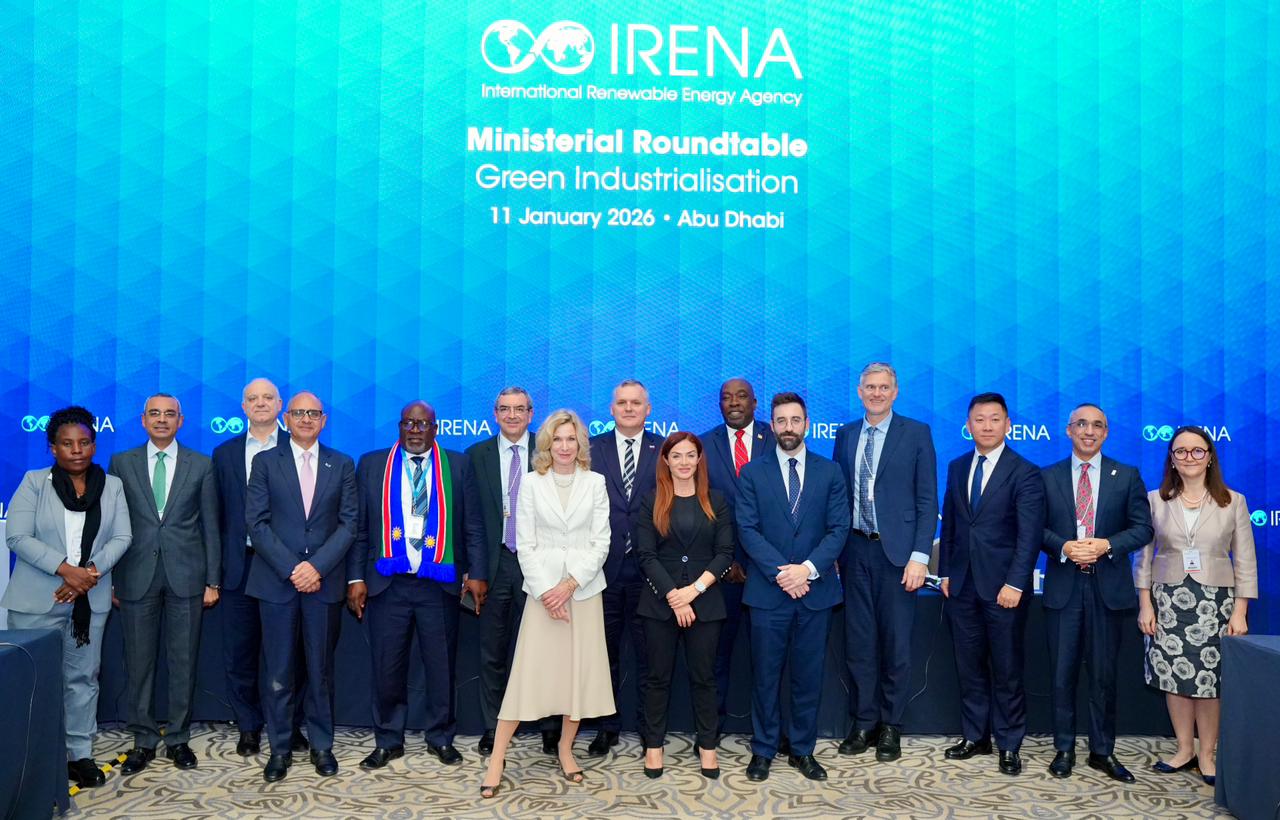
Ministerial Roundtable on Green Industrialization
Bringing together ministers and decision-makers from the public and private sectors, this Ministerial Roundtable charts a strategic path forward for green industrialisation—a transformative opportunity to align economic development with climate action.
See the live stream here:
Opening the ministerial roundtable, Francesco La Camera, Director-General of IRENA, stressed that the session’s agenda goes beyond energy transition technology. "It is about transforming the pathway to align economic growth with climate action," he said. "By fostering green industrialisation, we can create resilient economies and inclusive value chains." He highlighted three interdependent pillars for success: energy and processing infrastructure, skilled human capital, and access to finance. "Our shared task today is to move quickly from ambition to implementation, ensuring that strategies translate into finance-ready, bankable projects," he continued. He also emphasised the need to diversify manufacturing capabilities, to create regional opportunities to support a just and inclusive transition.
Setting the scene, Hon. Ms. Yeukai Simbanegavi, Deputy Minister of Energy and Power Development of Zimbabwe, presented her country's approach to green industrialisation within the African context. "Green industrialisation is not simply a climate response for Africa, it is our development pathway," she said. Outlining efforts to localise renewable energy manufacturing, she noted: "Localising renewable energy manufacturing strengthens skills development, promotes small and medium-sized enterprises participation, and creates employment for youth and women, which are key pillars of Africa's long-term agenda." She closed with a clear message: "The global energy transition cannot succeed without Africa's industrialisation," pledging to turn ambition into tangible results.
The panel discussion was introduced by Ms. Melina Crane, who highlighted that the energy transition is "an equally profound social transformation," requiring policies that boost investment in green jobs while enhancing skills and capacity. She invited panellists to share experiences on building green industrial value chains and overcoming barriers, with a focus on de-risking initiatives, creating bankable projects, and leveraging partnerships to unlock investment.
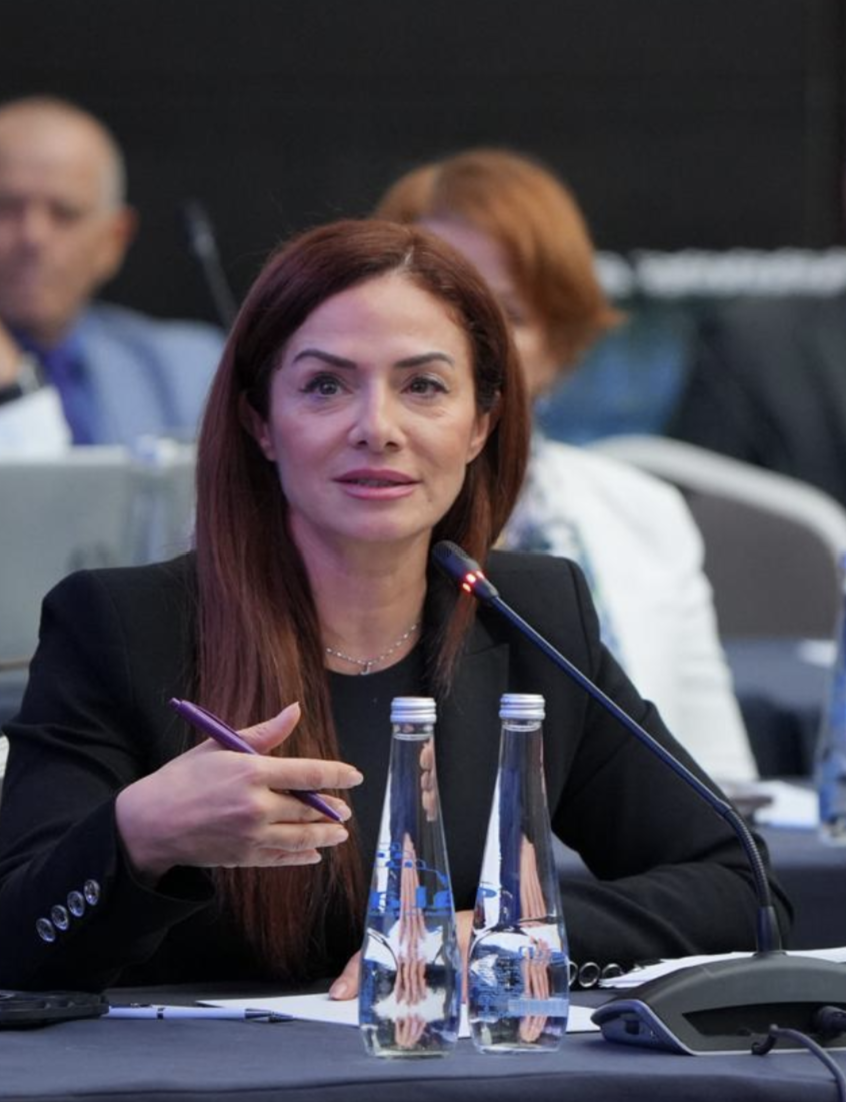
H.E. Ms. Miriam Dalli, Minister for the Environment, Energy and Public Cleanliness of Malta, shared insights on navigating the green transition as a small island state. "Success links directly to international cooperation—between states, academia, researchers, innovators, and the private sector," she said, outlining Malta's collaborative approach. On financing, she noted: "We are introducing new innovative financial tools, to bring together the public and private sectors in financing sustainable energy projects," she said, noting the importance of balancing competing priorities: "Investors want a return on investment, while government wants price stability, this is the balance we are trying to achieve." |
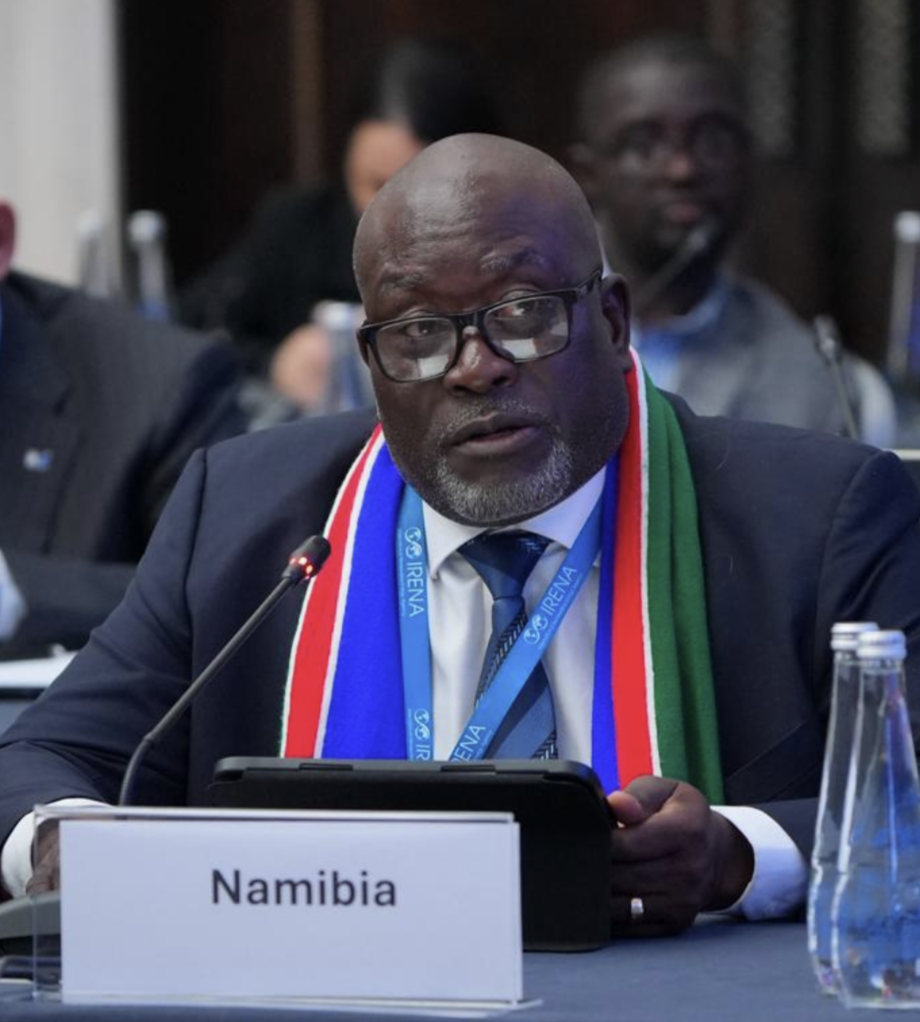
Outlining Namibia's vision to become a global leader in green hydrogen, H.E. Mr. Modestus Amutse, Namibia's Minister of Industries, Mines and Energy said, "Our ambition goes beyond exporting renewables, it is to build new green industries at scale that create jobs and strengthen long-term economic resilience.". Highlighting the economic potential, he said the sector will "support up to 30,000 jobs by 2030" while establishing Namibia as a strategic supplier to global decarbonising markets. He identified "securing long-term binding offtake agreements" as a critical hurdle, noting Namibia is using blended finance to de-risk early projects and mobilise private investment. |
The roundtable explored practical approaches to mobilise public and private capital, including blended finance, concessional funding, and mechanisms for project preparation and de-risking investment Project facilitation and investment matchmaking were highlighted as key tools for creating bankable projects and connecting them with climate-aligned investors. Concluding the discussion, participants called for stronger collaboration between academia, researchers, innovators, and private enterprise. IRENA's role in translating ambition into bankable projects, leveraging its Climate Investment Platform, and disseminating best practices was underscored as essential to advancing green industrialisation.