

Socio-economic modelling capacity building workshop for Indonesia
Indonesia is undergoing a pivotal shift towards cleaner and more sustainable energy systems in line with its commitment to achieve net-zero emissions by 2060 or sooner. This transition will require significant changes in energy production, consumption, investment patterns, and labour markets. IRENA’s report Socio-economic impact of the energy transition: Indonesia in 2023 showed that energy transition scenario would mean reduced greenhouse gas emissions, and enhanced economic resilience. The GDP would improve by 0.5% on annual average till 2050 compared to the Planned Energy Scenario (PES), creating almost 2.7 million additional jobs in the economy in 2050.
IRENA’s socio-economic analyses are carried out using macro econometric models. They help assessing the impact of alternative strategic policy and technology choices on GDP, employment, trade and sectoral shifts, and public finance. They are powerful but also expensive and often require specialised expertise, especially to link energy sector transformations to the wider economy. To address these concerns, IRENA has developed a country-tailored, energy–economy–environment (E3) macro-econometric model. The model is designed with a user-friendly interface requiring no programming skills, making it accessible for policymakers and analysts alike.
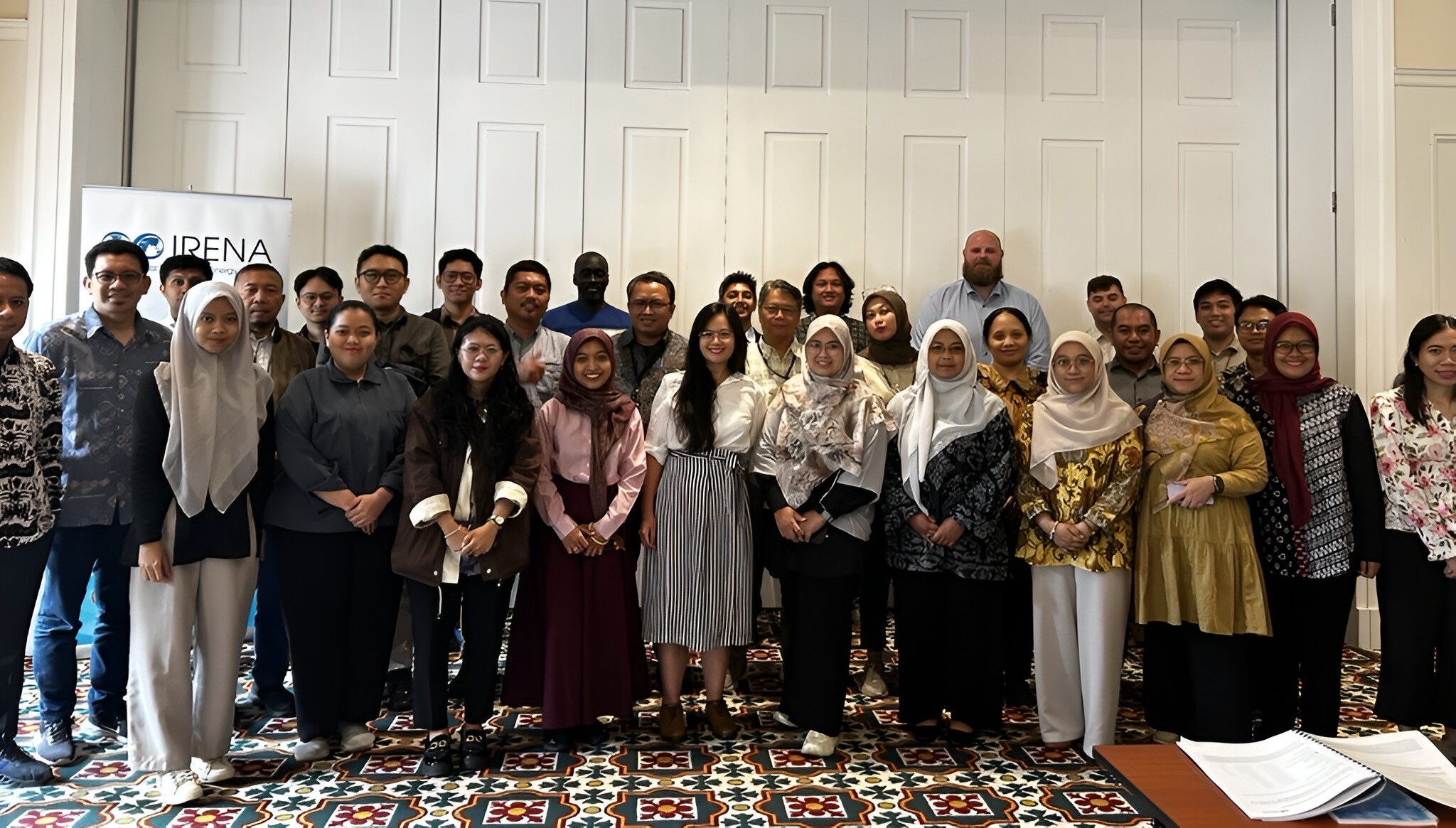
To operationalise this approach, IRENA organised a capacity building workshop on Socio-economic Impact Model for Indonesia with country data and targets. Scenarios that represent IRENA’s analytical perspective on Indonesia’s energy transition possibilities are also included in the model. Subsequently, IRENA organised a training workshop that will not only inform policy-makers of IRENA’s assessment but also support national experts to modify and adapt scenarios to reflect Indonesia’s national priorities and perspectives.
Mr. Praptono Adhi Sulistomo, Deputy Director for Various New and Renewable Energy Investment and Cooperation, MEMR reaffirmed Indonesia’s strong pledge to advancing the energy transition, emphasising that socio-economic modelling is essential for effective energy planning and impact assessment — not only to inform sound policymaking but also to build political consensus and ownership. Mr. Allan Bertelsen, Energy Counsellor, Denmark Embassy Indonesia highlighted the longstanding collaboration between Denmark and Indonesia, underscoring the value of knowledge-sharing workshops in fostering cooperation, dialogue, and mutual learning. Mr. Gondia Seck from IRENA highlighted the Agency’s ongoing support to its Member States and reiterated commitment to strengthening capacity-building efforts to enable evidence-based policymaking.
Working closely with ministries and governmental agencies, IRENA facilitated knowledge transfer and strengthened institutional capabilities to evaluate the economic, social and environmental implications of energy transition strategies. The key rational was to strengthen national policymakers’ capacity for independent assessment, enabling coherent policy decisions that integrate development and climate objectives across sectors. This is part of IRENA’s on-going efforts to support its Member States to integrate global best practices in their national planning processes.